
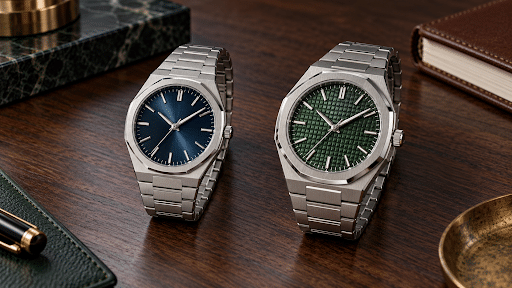
The Tissot PRX is recognized for its slim 1970s-inspired case, integrated bracelet, and ability to move easily between casual and formal settings. Yet choosing a PRX is not only about dial colour. The collection includes quartz, automatic, chronograph, and solar options in different sizes. For many buyers, the central decision is whether the practical quartz version or the mechanical Powermatic 80 better matches their routine.
Why the Tissot PRX Design Stands Out
An integrated bracelet creates a continuous line from the case to the wrist, giving the watch a more architectural look than a conventional round watch with separate lugs. Brushed steel surfaces keep the design versatile, while polished accents and bold dial finishes add enough detail for dressier occasions. This combination explains why the PRX can work with office clothing, denim, knitwear, or an evening outfit.
The design also wears differently from its diameter alone. The case shape and first bracelet links affect how the watch spans the wrist, so buyers should consider proportions as carefully as the movement.
Quartz: Accurate, Slim, and Easy to Own
A Tissot PRX quartz model is ideal for someone who values accuracy and convenience. It can remain ready to wear after sitting in a drawer, requires little routine attention, and typically has a slimmer profile. The cleaner dial also suits buyers who want the case and bracelet design to remain the main visual focus.
Quartz is particularly practical as a first Swiss watch, an office watch, or part of a larger rotation. It offers the recognizable PRX appearance without requiring the wearer to monitor a power reserve or reset the time after an extended break.
Powermatic 80: Mechanical Character and Texture
Case size should be selected by wrist proportions and comfort, not trend alone
The Tissot PRX Powermatic 80 is designed for buyers who enjoy traditional mechanics. Its automatic movement is powered by wrist motion and offers up to 80 hours of power reserve in current collection models. Textured dials and a see-through caseback on selected references give the automatic version more visual depth and a stronger enthusiast appeal.
That character comes with a little more involvement. An automatic watch may need resetting after being left unworn beyond its reserve, and the case can feel slightly more substantial. Buyers who enjoy the mechanism often see that interaction as part of the experience rather than an inconvenience.
Should You Choose 35mm or 40mm?
A Tissot PRX 35mm offers a compact, vintage-leaning fit and can suit smaller wrists or anyone who prefers a discreet watch. The larger size creates more wrist presence and gives textured or coloured dials additional visual impact. Instead of choosing by gender label, compare wrist width, case span, thickness, and how the first bracelet links sit against the wrist.
A Watch for Work and Weekends
The PRX profile transitions easily from professional clothing to relaxed weekends
Both movements share the same versatile design language. Neutral dials are easy to coordinate with professional wardrobes, while ice blue, green, gold-tone, and other expressive finishes create a stronger statement. Quick-release options on selected references can also make it easier to change the look without replacing the watch.
Which Tissot PRX Is Right for You?
Choose quartz if accuracy, slimness, and low-maintenance ownership are the priorities. Choose the automatic version if mechanical engineering, dial texture, and a longer power reserve make the watch more meaningful. Then select 35mm or a larger case by comfort and wrist proportion. Whichever movement you prefer, verify the exact dimensions, crystal, water resistance, warranty, and included bracelet or strap before ordering. The right PRX is the version that fits naturally into your routine and keeps earning wrist time.
Read More: G-Shock Watches Built for Strength, Style and Adventure