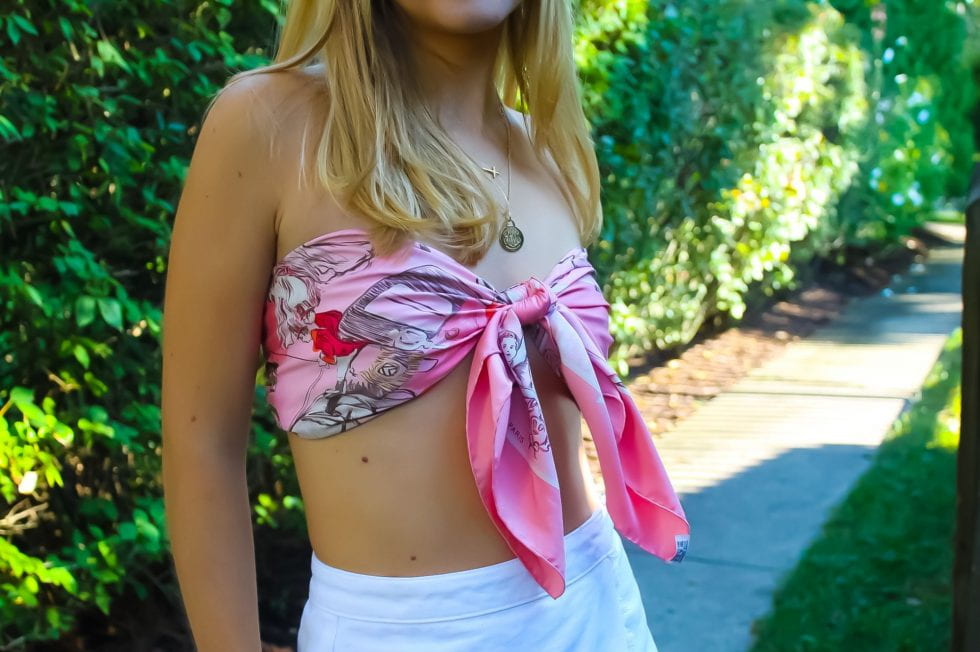
A square of fabric can do more work than half the pieces hanging in your closet. That is why scarf tops keep returning whenever American style gets bored with safe basics and starts craving something sharper, lighter, and more personal. A scarf tied as a top does not feel like a backup plan anymore. It feels intentional, especially when the fabric, knot, neckline, and styling all support the outfit instead of looking like a last-minute beach trick.
The shift is easy to spot from Los Angeles rooftop dinners to Miami resort weekends and New York summer nights. Women are treating scarves as real wardrobe pieces, not loose extras tossed over a handbag. Fashion editors, vintage sellers, and creators on independent style and culture platforms have helped push that idea into everyday dressing, where one silk square can carry an entire look.
The appeal is not only about showing skin. It is about control. You choose the shape. You decide the coverage. You make a common outfit feel custom without buying another fitted top that looks like everyone else’s.
Why Scarf Tops Feel More Like Clothing Than Styling Tricks Now
A scarf becomes clothing the second it stops depending on novelty. The old version looked temporary, like something tied quickly over a swimsuit after lunch. The newer version works because women are building complete outfits around it, with proper proportions, stronger fabrics, and smarter support underneath when needed.
Why scarf top outfits work better with structure
The strongest scarf top outfits start with balance. A tied scarf already has movement, so the rest of the look needs weight. Wide-leg trousers, straight denim, linen pants, or a clean column skirt can make the top feel deliberate instead of flimsy.
A woman wearing a printed scarf with faded low-rise jeans may look casual, but the outfit can fall apart if every piece feels soft. Add a leather belt, a structured shoulder bag, and simple sandals, and the same scarf suddenly reads like a real top. The anchor pieces tell the eye that the look was built, not improvised.
Fabric matters here. Thin polyester can twist, sag, and lose shape by the second hour. Cotton, silk twill, satin-backed crepe, and thicker vintage scarves hold knots better. That small difference changes the entire mood.
The smartest move is picking one area of looseness. If the scarf drapes across the chest, keep the waist clean. If the knot sits at the front, keep the bottoms simple. Too much movement in one outfit can turn charm into clutter.
How American casual style made the look easier to wear
American fashion has always had room for pieces that feel relaxed but still styled. Denim, tank dresses, slip skirts, sneakers, and oversized shirts created the perfect setting for a scarf as top because they make the risk feel less precious.
That matters in real life. A scarf tied with white jeans in Austin feels different from one worn with a satin maxi skirt in Manhattan. Both can work, but the styling language changes. The Texas version may lean sun-washed and practical. The New York version may lean sleek and evening-ready.
The counterintuitive part is that casual pieces often make the scarf look more expensive. A designer scarf worn with head-to-toe polished pieces can feel stiff. The same scarf with worn-in denim and flat sandals can look personal, like something pulled from a closet with history.
That lived-in quality is the reason the trend keeps breathing. It does not need a runway mood to survive. It can sit inside a normal summer wardrobe and still feel fresh.
Choosing the Right Scarf for Coverage, Shape, and Confidence
A scarf tied as a top is only as good as its dimensions. A beautiful print will not save the outfit if the square is too small, too slippery, or too transparent for the shape you want. The fabric has to behave like clothing before the styling can succeed.
Why silk scarf tops need smarter layering choices
Silk scarf tops look polished because silk catches light without looking heavy. The issue is that silk also slides, especially in humid cities like Houston, Tampa, or New Orleans. That does not mean you should avoid it. It means you should plan around it.
A bandeau, adhesive cups, fashion tape, or a thin strapless base can make silk feel secure. For more coverage, a fitted tube top under the scarf keeps the look clean while removing the constant need to adjust. Nobody enjoys an outfit that asks for attention every five minutes.
Print scale also matters. A large border print can frame the neckline beautifully, while tiny repeats may disappear once the scarf is folded. Vintage silk scarves often have stronger borders, which is why they work so well for halter and triangle styles.
The unexpected lesson is simple: the prettiest scarf is not always the best top. The best one has enough size, grip, opacity, and pattern placement to survive movement.
What size scarf works best for different body types
A 35-inch square is often the sweet spot for many scarf-as-top styles. It gives enough fabric for a triangle fold, halter tie, or back knot without leaving the wearer trapped in tiny knots. Smaller scarves can work for petite frames or layered looks, but they usually need a base underneath.
Larger scarves create more options. They can wrap across the torso, twist into a bandeau shape, or tie at the shoulder with more coverage. On curvier bodies, a bigger square often feels less stressful because it gives the fabric room to land where the wearer wants it.
Rectangular scarves deserve attention too. A long scarf can create a cleaner wrap, especially when tied around the back or crossed at the front. It can look closer to a blouse than a folded square, which helps for dinners, parties, and vacation outfits where you want ease without looking underdressed.
Fit is personal. The mirror should answer one question: can you move, sit, lift your arms, and breathe without thinking about the knot? If not, the scarf is not failing you. The size is.
Scarf Tops Styled as Actual Tops Rather Than Just Accessories
The difference between a scarf top and a scarf used as decoration is commitment. Decoration sits on top of an outfit. Clothing carries the outfit. That means the scarf needs a neckline, a shape, a supporting base if needed, and a full styling plan around it.
How to tie a scarf as top without looking unfinished
A strong knot is the quiet hero of the whole look. Back knots work well when you want a clean front. Front knots work when the knot becomes part of the design. Side knots can add shape, but they need confidence because they pull the eye toward the waist.
The triangle halter is the easiest entry point. Fold the scarf into a triangle, tie two corners behind the neck, and secure the lower corners behind the back. It works with jeans, linen pants, and long skirts because the shape is familiar enough to feel wearable.
The bandeau wrap feels cleaner but needs more grip. Fold the scarf into a wide band, wrap it around the chest, and knot it at the back. This style works best with thicker scarves or a fitted base underneath. A slippery silk band with no support can look great in a photo and become annoying by dinner.
A scarf as top should never depend on luck. Test it at home before wearing it out. Sit down, reach forward, turn sideways, and check the back. The outfit either earns your trust before you leave, or it does not earn the night.
How summer scarf styling changes from beachwear to dinnerwear
Summer scarf styling often starts near water, but it does not have to stay there. The same scarf that works over a bikini can move into dinner territory if the rest of the outfit changes. Swap cutoffs for tailored pants. Trade flip-flops for low heels or leather flats. Add earrings with shape.
Color does a lot of the work. Bright tropical prints feel natural for poolside dressing. Deep brown, black, ivory, navy, burgundy, and muted florals feel more city-ready. A scarf tied as a halter with cream trousers can look grown and intentional, even in August heat.
Texture makes the biggest difference after sunset. Linen keeps the look relaxed. Satin makes it dressier. Denim makes it grounded. Leather makes it sharper. The scarf responds to what surrounds it.
That is why summer scarf styling should not be treated as one mood. It can be beachy, clean, romantic, minimal, or bold. The scarf only starts the sentence. The rest of the outfit finishes it.
Making the Trend Feel Wearable Beyond Vacation Photos
The real test of any styling idea is whether it works away from perfect lighting. Vacation outfits get more forgiveness because the setting carries half the fantasy. Daily outfits need better planning, especially in American cities where weather, movement, and dress codes change fast.
When scarf top outfits belong in everyday wardrobes
Scarf top outfits work best in everyday wardrobes when they have a clear setting. Weekend brunch, outdoor concerts, patio dinners, rooftop gatherings, summer festivals, and resort trips all make sense. Office settings are harder unless the scarf is layered under a blazer or worn over a fitted base with enough coverage.
A printed scarf under an oversized white button-down can feel wearable for errands in San Diego or lunch in Charleston. Leave the shirt open, pair it with straight jeans, and let the scarf act like a soft printed camisole. The shirt gives coverage, while the scarf gives personality.
For cooler evenings, a lightweight blazer changes everything. It frames the scarf and turns the outfit from bare to styled. This trick works especially well with black trousers, gold hoops, and flat sandals.
The surprise is that more layers can make the scarf feel more like a top, not less. A bare scarf alone can read playful. A scarf under a jacket reads designed.
How to keep the look polished without losing ease
Polish comes from editing. A scarf already brings color, folds, and visual movement, so the accessories should know when to step back. One strong earring, one clean bag, or one interesting shoe is enough.
Hair also changes the mood. A sleek bun makes the neckline sharper. Loose waves soften it. A claw clip can make the whole thing feel relaxed in a California way. None of these choices are minor because the scarf usually sits close to the face.
Shoes should match the intention. Sneakers make the outfit daytime-friendly. Strappy sandals keep it light. Mules add quiet polish. Heavy boots can work with denim, but they need confidence because they shift the outfit toward contrast.
A scarf top should feel easy, but it should not look careless. The best versions have a little tension: soft fabric against rigid denim, a vintage print against modern trousers, a playful knot under a serious blazer. That friction is where the look gets interesting.
A scarf can be the smallest piece in your outfit and still decide the whole mood. That is the power of treating fabric as design rather than decoration. Scarf tops are not for every setting, and that is fine. Their strength is not in replacing every tank, blouse, or camisole you own. Their strength is in giving you a shape that feels personal, adjustable, and alive.
Start with one scarf that has enough size and enough body. Try two tie methods before deciding it is not for you. Build the outfit from the bottom up, then let the scarf become the final shape rather than a loose afterthought. When you stop treating it as an accessory, it stops behaving like one.
The next time your closet feels flat, do not shop first. Pull out the scarf you forgot you owned, tie it with intention, and let one square of fabric change the whole conversation.
Frequently Asked Questions
How do you style a scarf as a top for everyday wear?
Start with a larger square scarf and pair it with steady basics like straight jeans, linen pants, or a long skirt. Add a fitted layer underneath if you want more coverage. Keep accessories simple so the scarf feels like the outfit’s main piece.
What size scarf is best for making a secure top?
A square scarf around 35 inches usually gives the most styling freedom. It offers enough fabric for halter ties, bandeau wraps, and back knots. Larger scarves work better for fuller coverage, while smaller scarves often need layering underneath.
Are silk scarf tops comfortable for hot weather?
Silk can feel light and breathable, but it may slip in heat or humidity. A strapless base, fashion tape, or a thicker silk twill can help it stay in place. Choose darker prints or patterned fabric if you want less transparency.
Can you wear a scarf top without showing too much skin?
Yes. Choose a larger scarf, fold it wider, and layer it over a tube top, tank, or fitted bandeau. You can also wear it under an open button-down shirt or blazer. That keeps the look stylish while adding coverage.
What bottoms look best with a scarf tied as a top?
Straight-leg jeans, wide-leg trousers, linen pants, and column skirts usually work best. They balance the softness of the scarf and make the outfit feel complete. Avoid overly busy bottoms unless the scarf print is simple.
How do you make a scarf top look more expensive?
Pick fabric with weight, a clear border print, and a clean finish. Tie it neatly, then pair it with structured pieces like tailored pants, leather sandals, or a sharp bag. Messy knots and thin fabric can make the look feel cheap.
Can scarf top outfits work for evening plans?
They can work well for patio dinners, rooftop drinks, beach vacations, and summer parties. Choose deeper colors, smoother fabric, and polished bottoms. A blazer or light jacket can make the outfit feel more dressed without hiding the scarf.
What is the easiest scarf top style for beginners?
The triangle halter is usually the easiest. Fold the scarf diagonally, tie two corners behind your neck, then secure the lower corners behind your back. It gives a clear shape, works with many outfits, and feels easier to adjust than a bandeau wrap.